ServicesRain Chains
Rain Chains in Hanahan
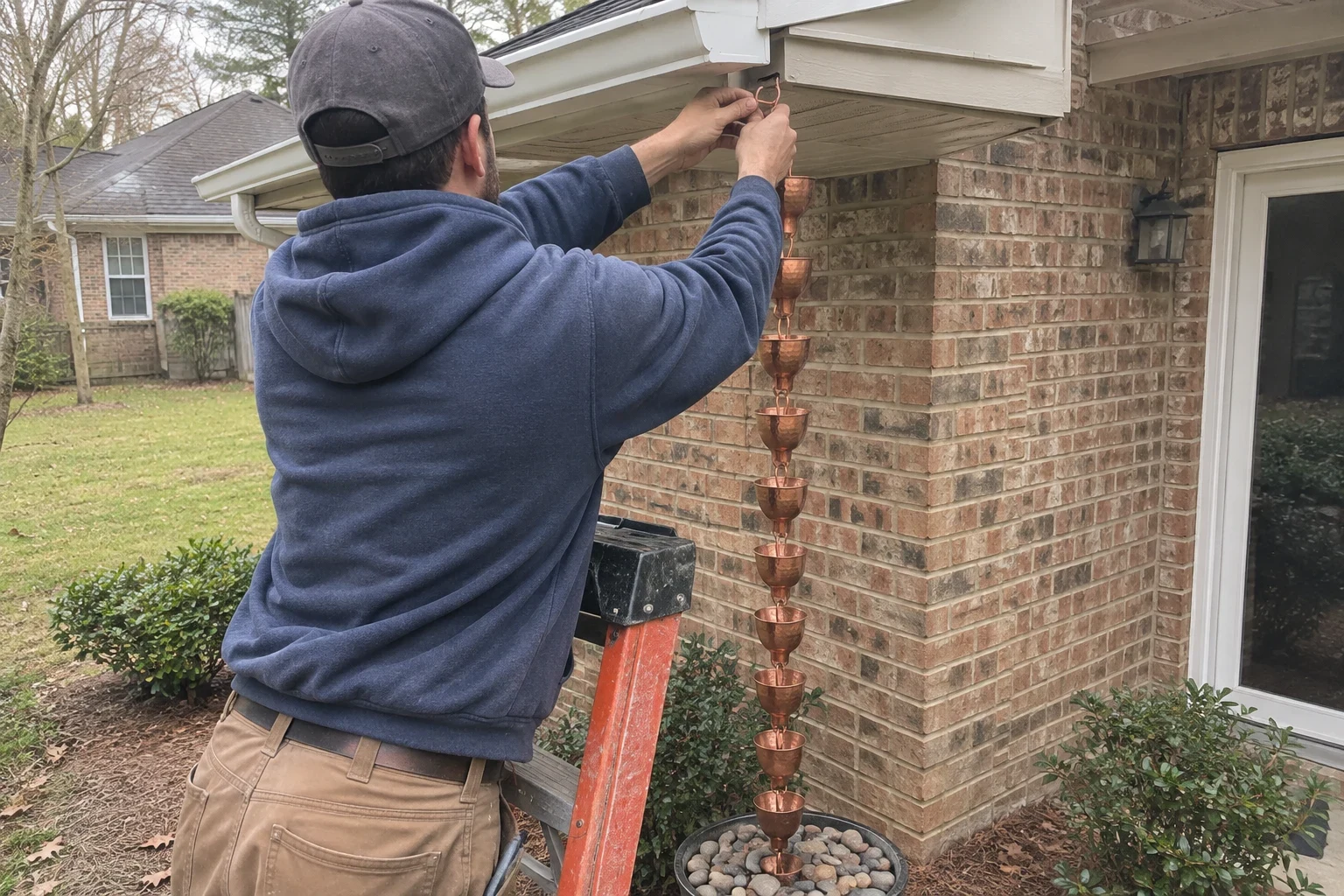
A rain chain guides roof water down a run of cups or links instead of a closed pipe. We fit the gutter outlet properly, choose a chain that suits your roof's flow, and set a basin at the bottom so the water lands where it should.
A quieter, more visible way to bring water down
Rain chains do the same job as an enclosed drop: they carry water from the gutter outlet to the ground. The difference is that you can see and hear the water move. Cup-style chains hold more flow and splash less. Open link chains look lighter but suit smaller roof sections and porches.
They work best where the roof area feeding that outlet is modest and the ground below can take the water. On a large roof face during a summer thunderstorm, a single chain can be overwhelmed, so we look at the roof before we recommend one. Sometimes the right answer is a chain at the entry and a conventional drop at the back corner.
If a storm has already damaged your gutters, we start there. Our gutter repair page covers that work, and we will photograph what we find so you have a clear record if you decide to talk with your insurer.
What the work includes
Outlet fitting
We install a rain chain adapter or reducer in the gutter outlet so water is funneled onto the chain rather than spilling past it. A loose outlet is the most common reason a chain sprays water against siding.
Chain selection
We walk you through copper, aluminum and powder-coated steel in cup and link styles. Copper weathers to a brown and then green patina over the years. Aluminum and coated steel hold their color.
Secure hanging
The chain hangs from a bracket bridged across the outlet, not from the gutter lip alone, so its weight in heavy rain does not pull the gutter out of line.
Ground anchoring
We tension the bottom of the chain to a stake or anchor so it does not swing and knock against the wall in gusty weather.
Basin and drainage
We set a basin, decorative bowl or gravel bed at the base and check that the ground slopes away from your foundation. Water that pools at the bottom of a chain defeats the purpose.
When a rain chain makes sense for your home
- A noisy or unsightly drop by the door
- An enclosed pipe beside an entry or patio can be replaced with a chain that looks finished and sounds softer in rain.
- Water spraying off an existing chain
- If a chain you already have splashes the siding or walkway, the outlet likely lacks an adapter or the chain style is wrong for the flow.
- A chain pulling the gutter down
- Sagging at the outlet means the chain is hanging from the gutter edge. That needs a proper bracket before the gutter bends.
- Erosion at the base
- Bare soil or a washed-out bed under the chain tells us the water needs a basin or better grading.
- Storm damage to a chain or outlet
- Hurricane-season winds can tear a chain loose and twist the outlet. We document the damage with photos before any repair.
How a rain chain job runs
- 1
Free estimate at your home
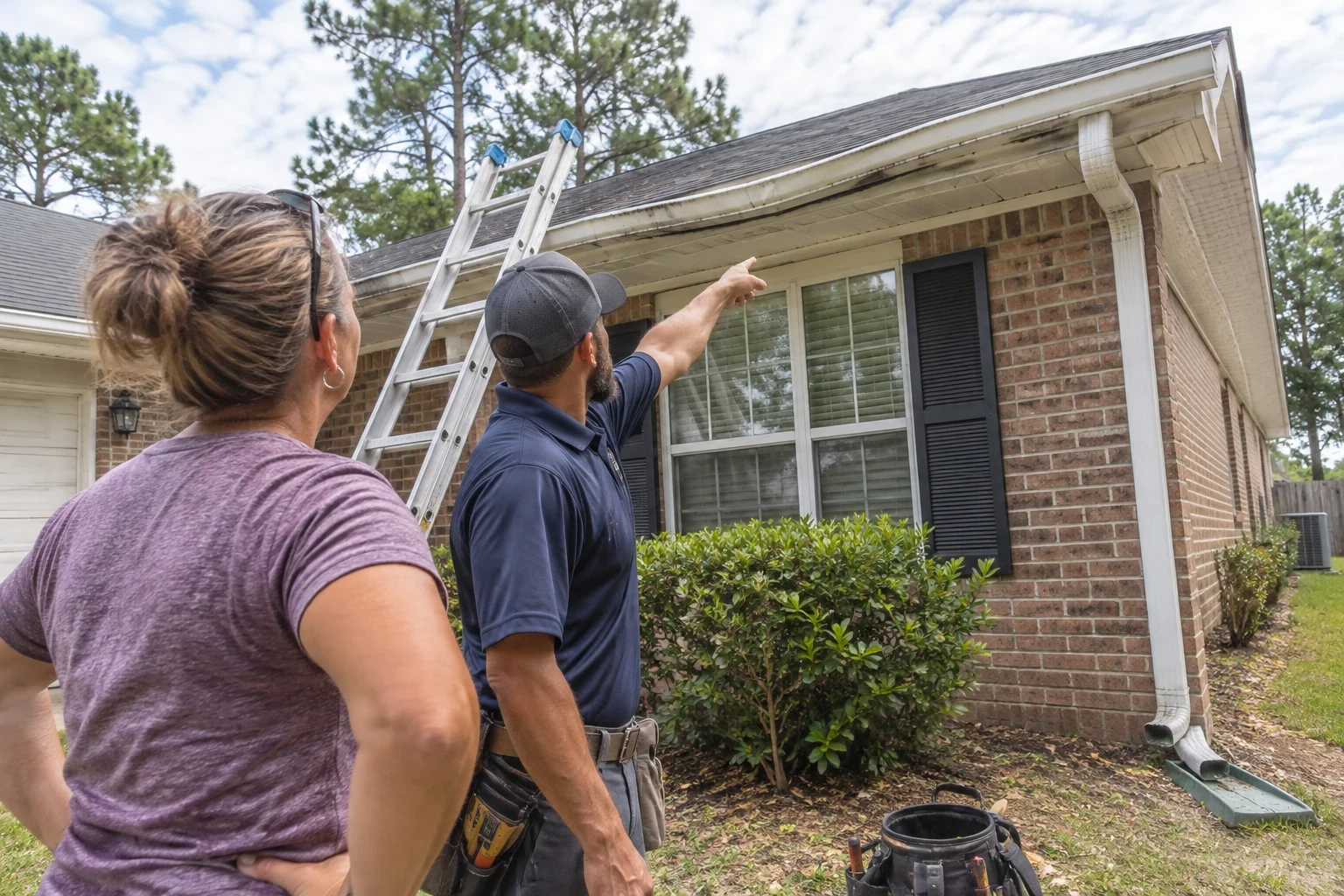
We look at the roof area feeding each outlet, the gutter condition and the ground below. You get a written estimate that lists the chain, the hardware and the drainage work separately.
- 2
Choosing the chain
We bring samples where we can and explain how each material will age in our humid, salty coastal air. You decide on style and finish with a clear sense of how it will look in five years.
- 3
Installation
We fit the outlet adapter, mount the bracket, hang and level the chain, then anchor the base. Most single-chain jobs are finished within a visit.
- 4
Water test and cleanup
We run water from a hose into the gutter to check the flow stays on the chain and drains away from the house. Then we clear away packaging, offcuts and any disturbed soil.
What moves the cost of a rain chain
Rain chain pricing depends far more on the chain you choose and the ground below it than on labor alone. We itemize each part in the estimate so you can compare options before deciding.
- Material and style
- Solid copper cup chains cost more than aluminum links, and heavier gauge copper costs more again. The finish you want is the biggest single factor.
- Drop height and outlet count
- Chain length follows the distance from the eave to the ground, so a second-story corner uses far more cups or links than a porch roof. Each extra outlet you want fitted brings its own adapter, bracket and anchor.
- Condition of the gutter
- If the outlet is corroded or the gutter section is out of pitch, it needs repair before a chain will hang straight and carry water properly.
- Ground drainage
- A simple gravel bed is modest. A basin with a buried drain line or regrading near the foundation takes more time and material.
Rain chain questions we hear
- Can a rain chain handle a heavy summer downpour?
- A cup-style chain on a modest roof section handles most storms well. On a large roof face, some water may sheet past the cups in the hardest rain. We size the choice to the roof area at the estimate and will tell you plainly if a chain is not the right fit for a particular corner.
- Can you add a rain chain to my existing gutters?
- Usually, yes. We check the outlet and the gutter section around it first. If the gutter is sound, we fit an adapter and bracket; if it is not, we explain the repair needed so the chain is not hanging from a weak edge.
- Will a copper chain turn green?
- Yes, over time. Untreated copper darkens to brown within months and slowly develops a green patina, faster near salt air. If you prefer the bright look, we can discuss sealed finishes or a different material.
- Will it bang against the house in the wind?
- Not if it is anchored. We tension the bottom to a stake or basin anchor so the chain stays plumb in gusts.
- A storm tore my rain chain down. Will insurance cover it?
- That depends on your policy and your adjuster, and we will not promise either way. What we can do is photograph the damaged chain, outlet and gutter, note what we see in writing and explain how storm damage claims generally work. You then decide whether to file.
See which chain suits your roofline
We will look at your gutters and the ground below, show you material options and give you a written estimate. There is no cost for the visit.